

- Site Navigation -

CAE Simulation in Automotive Stamping Die Design: Predictive Engineering
Date: 2026-09-21 10:58:57 Author: Haoxinran Views: 62 times
CAE Simulation in Automotive Stamping Die Design: Predictive Engineering
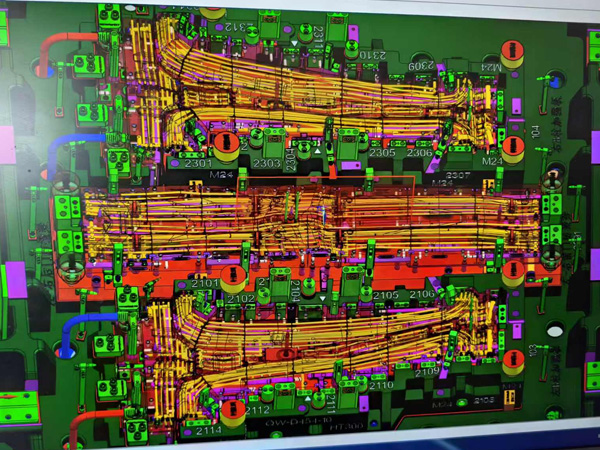
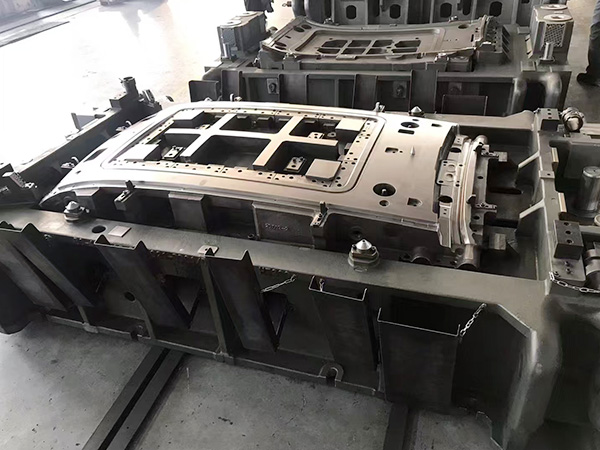
Computer-Aided Engineering (CAE) simulation has revolutionized automotive stamping die design by enabling predictive analysis of material behavior, defect prediction, and process optimization before physical tooling construction. This document explores the application of CAE simulation technology in stamping die design, covering key simulation methods, defect prediction capabilities, and process optimization strategies.
CAE Simulation Fundamentals
1. Finite Element Method (FEM) Applications
FEM-based simulation models the complex material deformation behavior during stamping processes. Key simulation capabilities include:
Material flow analysis: Predicts material movement and distribution during forming
Stress and strain analysis: Identifies areas of high stress and potential failure
Springback prediction: Forecasts dimensional changes after tool release
Thickness distribution analysis: Evaluates material thinning and thickening patterns
2. Simulation Software Tools
Modern stamping simulation software packages provide comprehensive analysis capabilities including explicit dynamic solvers for forming simulation, implicit solvers for springback analysis, and optimization algorithms for process parameter tuning. These tools integrate with CAD design systems to enable seamless data exchange between design and simulation environments.
Defect Prediction Capabilities
Forming Limit Diagram (FLD) Analysis
FLD analysis predicts material failure by comparing calculated strain levels against the material's forming limit curve. Areas exceeding the forming limit indicate potential cracking or tearing. This analysis guides die design modifications to reduce localized strain concentrations.
Wrinkling Prediction
Simulation identifies potential wrinkling areas by analyzing compressive stress states and material buckling tendencies. The analysis helps optimize blank holder force and draw bead placement to prevent wrinkling without causing excessive material thinning.
Surface Distortion Prediction
Advanced simulation techniques predict surface distortion and visual defects by analyzing residual stress distributions and material springback behavior. This capability enables early identification of potential surface quality issues before die construction.
Process Optimization Applications
Blank Shape Optimization
Simulation-driven blank shape optimization minimizes material waste while ensuring proper material distribution for optimal forming results. Iterative simulation processes refine the blank contour to achieve optimal material flow patterns.
Process Parameter Optimization
CAE simulation optimizes critical process parameters including blank holder force profiles, draw bead geometry, and lubrication conditions. Design of experiments (DOE) approaches systematically evaluate parameter combinations to identify optimal process settings.
Die Surface Compensation
Springback compensation uses simulation results to modify die surface geometry. The iterative compensation process adjusts die surfaces to counteract predicted springback, achieving final part dimensions within specification tolerances.
Benefits and Impact
CAE simulation provides significant benefits including reduced die development time, minimized physical tryout iterations, improved first-article quality, and lower overall development costs. Early defect identification prevents costly die modifications after construction.
Conclusion
CAE simulation has become an indispensable tool in modern stamping die design, enabling predictive engineering that significantly improves development efficiency and product quality. By leveraging advanced simulation capabilities, manufacturers can optimize die designs, predict and prevent defects, and reduce development time and costs.
References
Stamping Simulation Technology Guidelines - Engineering Software Standards
Finite Element Analysis in Sheet Metal Forming - Research Publications
Forming Limit Diagram Analysis - Material Science Research
Predictive Engineering in Die Design - Manufacturing Technology Standards

Contact Us
- Company Name: Hebei Haoxinran Machinery Manufacturing Co.,Ltd.
- Hotline: +86 18932785670
- Email: project@haoranmj.com
- Website: https://www.hxrmetal.com
- Address: Across from Sanjing Distillery on Road 4, Botou Economic Development Zone, Cangzhou City, Hebei Province


Copyright © 2026-2027 https://www.hxrmetal.com. All Rights Reserved. Hebei Haoxinran Machinery Manufacturing Co.,Ltd.