

- Site Navigation -

Understanding Hot Stamping Die Design Principles for Automotive Structural Components
Date: 2026-09-21 10:42:19 Author: Haoxinran Views: 95 times
Hot stamping is a critical manufacturing process in the automotive industry, especially for producing high-strength structural components that ensure passenger safety. The design of hot stamping dies directly determines the quality, dimensional accuracy, and production efficiency of these components. Understanding the core design principles is essential for achieving optimal results.
What is Hot Stamping Die Design?
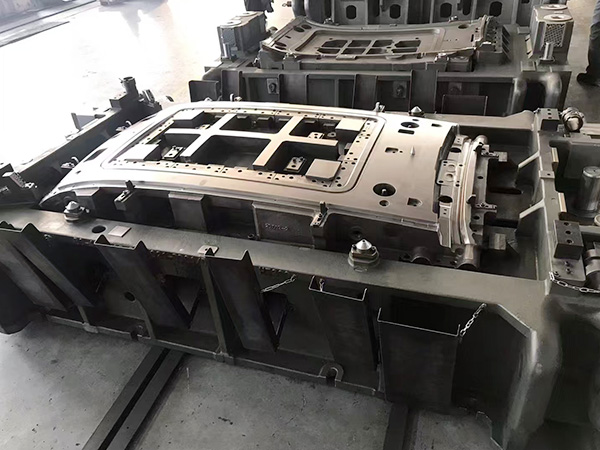
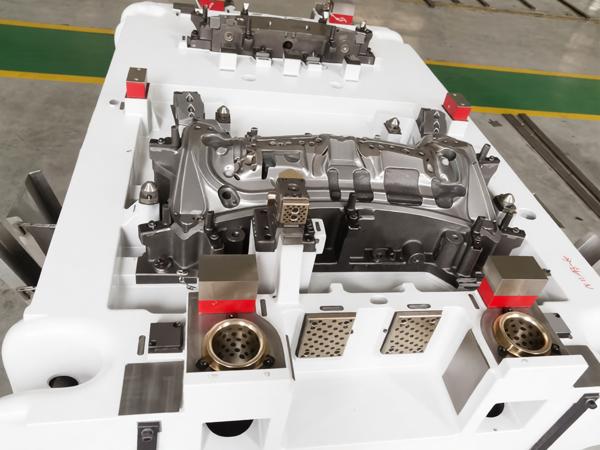
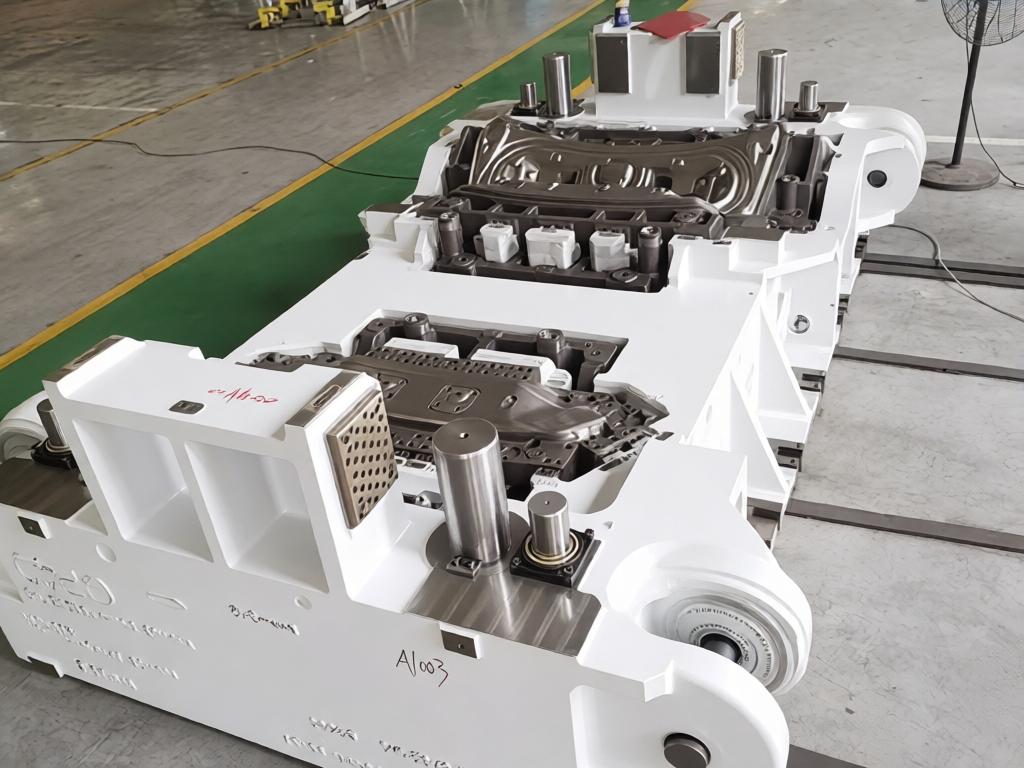
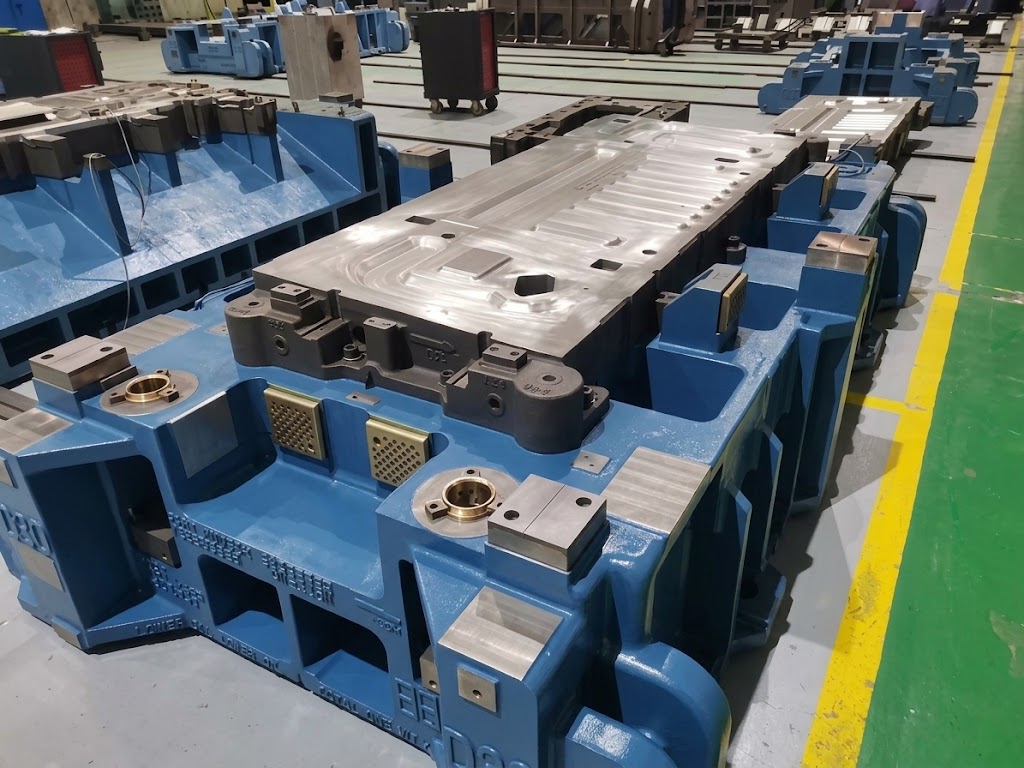
Hot stamping dies are specialized tooling systems used to form heated boron steel sheets into complex automotive structural parts. Unlike conventional cold stamping, hot stamping involves heating the blank to approximately 930-950°C, transferring it rapidly to the die, and simultaneously forming and quenching the material. This process transforms the microstructure from austenite to martensite, resulting in ultra-high strength components with tensile strengths exceeding 1500 MPa.
The die design must account for multiple critical factors including thermal management, material flow, quenching uniformity, and mechanical robustness. Each of these elements plays a vital role in the final product quality.
Key Components of Hot Stamping Dies
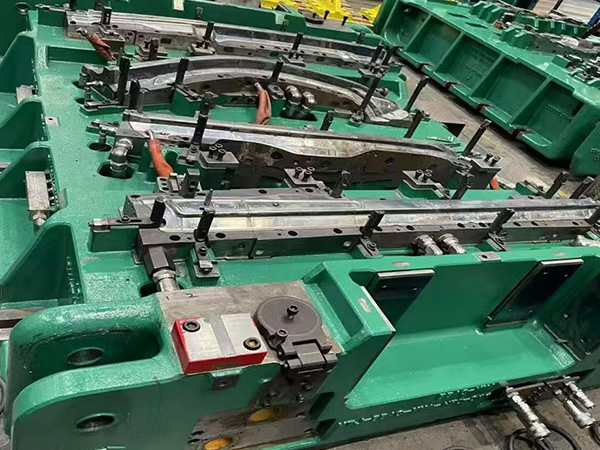
A well-designed hot stamping die consists of several essential components:
Upper and lower die bodies - Provide the forming surface and structural support
Cooling channels - Integral water cooling systems for rapid quenching
Blank holder system - Controls material flow and prevents wrinkling
Trimming and piercing features - Secondary operations for final part geometry
Temperature sensors - Monitor and control process consistency
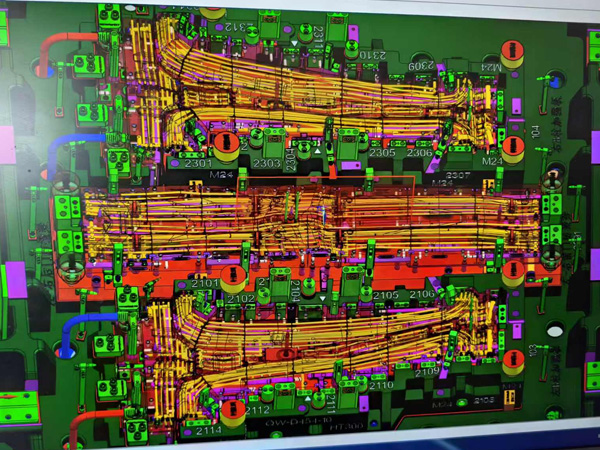
The cooling channel design is particularly critical. Channels must be positioned close to the forming surface to ensure rapid and uniform heat extraction. Uneven cooling can lead to distortion, residual stress, and inconsistent material properties across the component.
Material Selection for Hot Stamping Dies
Die material selection is one of the most important design decisions. Hot stamping dies must withstand extreme thermal cycling, mechanical wear, and chemical interaction with heated steel. Common die materials include:
H11/H13 tool steel - Standard choice for most applications, offering good thermal conductivity and toughness
1.2344 steel - Excellent hot hardness and wear resistance
Copper alloys - Used in specific areas requiring superior heat transfer
The choice of material depends on production volume, part complexity, and budget constraints. For high-volume production, premium die steels with enhanced thermal fatigue resistance deliver better long-term performance.
Temperature Control in Die Design
Precise temperature control is fundamental to successful hot stamping. The die surface temperature must be carefully managed throughout the production cycle. Ideal working temperatures typically range from 150-250°C at the start of each cycle.
Key temperature control considerations include:
Uniform die temperature distribution to prevent warping
Appropriate cooling rates to achieve full martensitic transformation
Thermal expansion compensation in die geometry
Insulation strategies to minimize heat loss
Poor temperature control can result in incomplete quenching, inadequate strength, and dimensional instability. Modern hot stamping lines often use closed-loop temperature control systems for consistent results.
Design Optimization for Quality and Efficiency
Advanced die design optimization uses finite element analysis (FEA) simulation to predict material flow, thermal distribution, and potential forming defects before die manufacturing. This virtual validation approach significantly reduces design iterations and development costs.
Common optimization objectives include:
Minimizing springback through controlled die geometry
Optimizing blank holder force distribution
Reducing cycle time through improved cooling efficiency
Enhancing die life through wear-resistant surface treatments
Surface treatments such as nitriding, PVD coatings, and specialized plating can dramatically improve die lifespan by reducing friction and preventing adhesion of heated steel to the die surface.
Conclusion
Hot stamping die design is a sophisticated engineering discipline that combines metallurgy, thermodynamics, mechanical design, and precision manufacturing. A well-executed die design not only ensures component quality but also maximizes production efficiency and reduces overall costs. As automotive lightweighting and safety requirements continue to evolve, the importance of advanced hot stamping die technology will only grow.
For manufacturers seeking reliable hot stamping die solutions, partnering with experienced tooling providers who understand these design principles is essential for achieving consistent, high-quality results in mass production.
References
Hot Stamping Die Design Guidelines for Automotive Applications
Advanced High-Strength Steel Forming Technology Handbook
Thermal Management in Sheet Metal Forming Processes
Finite Element Simulation of Hot Stamping Processes
Die Material Selection and Surface Treatment Engineering

Contact Us
- Company Name: Hebei Haoxinran Machinery Manufacturing Co.,Ltd.
- Hotline: +86 18932785670
- Email: project@haoranmj.com
- Website: https://www.hxrmetal.com
- Address: Across from Sanjing Distillery on Road 4, Botou Economic Development Zone, Cangzhou City, Hebei Province


Copyright © 2026-2027 https://www.hxrmetal.com. All Rights Reserved. Hebei Haoxinran Machinery Manufacturing Co.,Ltd.